
Bernie Sanders' Outsider in the White House is 50% off!
With Bernie entering the Democratic primary race, here's a look back on his long political career fighting for the working class.
With Bernie entering the Democratic primary race, here's a look back on his long political career fighting for the working class.

Meagan Day describes the rapid growth of the Democratic Socialists of America and puts forward an electoral strategy for the socialist movement.
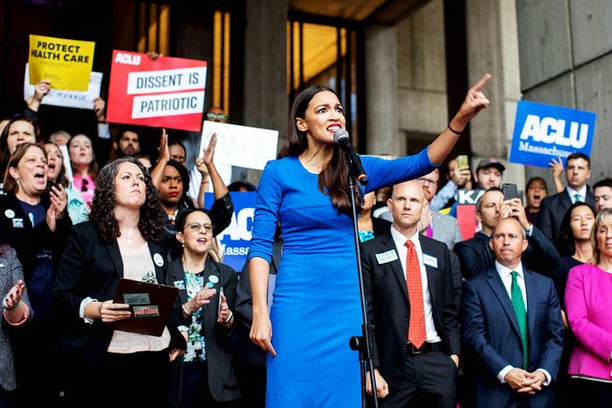
A reading list on working-class power, elections, and left-wing strategy.

The past year has seen the continuation of the debates in the DSA around questions of class, identity and strategy. In this article, David I. Backer argues against a class separatism which would reduce questions of identity to those of class, and argues for a new perspective which is attentive to both the structures and the experience of capitalist society.

Attempts to identify Trump with fascism have proliferated across the political spectrum. In the latest number of New Left Review, Dylan Riley argues that the comparison serves rather to illuminate the specificity of today’s political situation – and the incoherence of Trump’s form of rule.

Demands centering on the need for a "Green New Deal", focused on the creation of a public works “green jobs” infrastructure policy, have helped energise the American left in recent weeks. In this article Matt Huber offers four vital lessons from the original New Deal that contemporary activists and policymakers must learn.
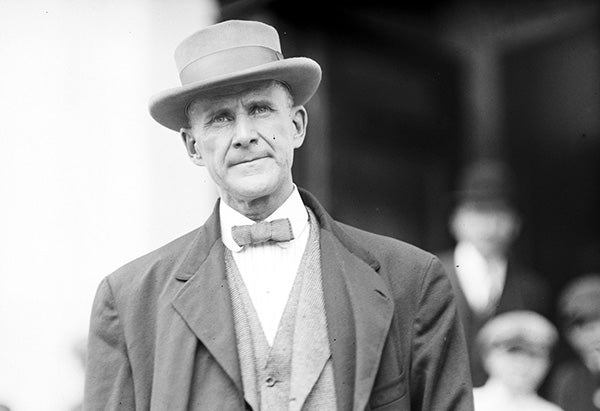
Check out a preview of the new graphic biography of Eugene Debs, coming out next February!

Following Bernie Sander's unsuccessful campaign for the Presidential nomination in 2016, the Democratic Party has once more become a site of struggle for socialists. Leading up to the November 6th midterms, could the Democratic Party, in fact, be the best vehicle for social change? In this essay, first published over 30 years ago, Mike Davis warns us about the pitfalls of electoralism, and the passive clientelism that tends to replace popular politics under the bureaucratic guidance of the Democratic Party.
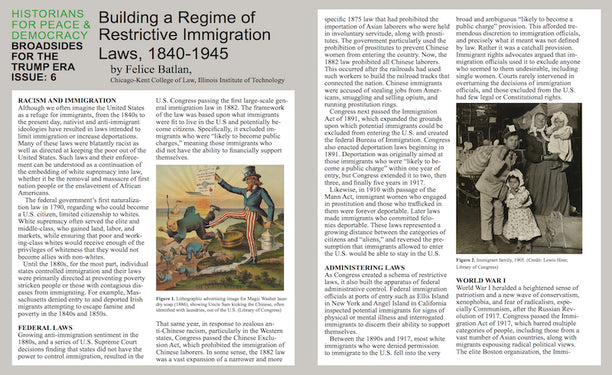
In this compact, printable history, Felice Batlan traces the development of US immigration restrictions from the mid-nineteenth through the mid-twentieth century.

Opinion columns were designed by God to have the same lifespan as a croissant.

Asad Haider traces Spinoza’s question through the ideas of Wilhelm Reich and Stuart Hall, and argues that to make politics possible again we need to abandon the position of moral and political purity that can only rely on superstition.

Asad Haider's left critique of "identity politics," a call for us to move beyond individual recognition to the collective struggle for an egalitarian society.